

Search for articles or browse our knowledge portal by topic.
Truck Climbing Lanes and Truck Escape Ramps

Truck climbing lane – An auxiliary lane added on the uphill side of a roadway to allow heavy vehicles traveling at reduced speeds to be separated from faster-moving traffic.
Emergency Escape Ramp – A ramp located on a downhill grade that allows runaway vehicles to leave the roadway and stop safely.
Adding a truck climbing lane to a facility can reduce crashes by up to 46% (CMF ID#10075), improve capacity, and streamline traffic flows on upgrades where trucks cannot maintain their speeds and would consequently impede the movements of other vehicles. Based on economic considerations, KYTC has established three criteria (i.e., warrants) that must be satisfied to justify use of a truck climbing lane:
- Traffic flow rate on the upgrade is > 200 vehicles per hour.
- Truck traffic flow rate on the upgrade is > 20 vehicles per hour.
- At least one of the following conditions is present:
- A typical heavy truck will experience a speed reduction ³ 10 mph on the upgrade.
- The level of service (LOS) on the upgrade is an E or F.
- A reduction of two or more LOS when transitioning from the approach segment to the grade
For the third warrant, designers should begin with the first item and work downward in order to determine if the warrant is satisfied. Section 3 describes how to determine the critical length of grade for a 10-mph speed reduction. If the critical length of grade is less than the length of grade provided, the warrant is met. Even if the warrants listed above are not met, other reasons exist to consider a climbing lane. For example, high crash frequencies may justify use of a climbing lane irrespective of grade or traffic volumes. Similarly, if a facility offers few opportunities for passing, climbing lanes may be added where favorable sight conditions are present. Several rules of thumb apply to the design of climbing lanes:
- Keep a climbing lane the same width as through lanes.
- The cross slope of a climbing lane is typically handled in the same manner as adding a lane to a multilane roadway.
- Shoulder widths along climbing lines should be the same as shoulder widths adjacent to two-lane segments, especially if bike lanes are present.
- A usable shoulder ³ 4 feet is acceptable if a climbing lane is being added to an existing two-lane facility.
- A climbing lane should be designed, constructed, and signed so drivers immediately recognize the climbing lane as an added lane for one direction of travel.
- Appropriate signs include Slower Traffic Keep Right (R4-3) and Trucks Use Right Lane (R4-5).
- Clearly mark the centerline, including yellow barrier lines for no passing signs.
Vehicle turnouts are an alternative to climbing lanes for mitigating the impacts of slow-moving vehicles. Their use is generally reserved for low-volume roadways and areas with steep grades and complex terrain (e.g., mountainous topography) where building an additional lane is unlikely to be cost-effective. Section 3.4.4.3 of the Green Book provides design guidance for turnouts, including recommended lengths and sight distances.
Climbing lanes are less common on multilane roadways, but their use can be justified if travel demand is sufficient and grades are long and steep enough to degrade safety and operations. KYTC has not established warrants for climbing lanes on multilane facilities.
It should be noted that the power-to-weight ratio used by AASHTO has evolved over time as truck engine performance has improved. Initial recommendations were introduced in 1949, revised in 2000, and updated again in the 2018 Green Book. As a result of these changes, some existing truck climbing lanes may have been designed longer than is now considered necessary, and certain locations may no longer meet the 10-mph warrant. This creates potential opportunities, during maintenance or reconstruction projects, to reallocate existing pavement width to other needs, such as turn lanes or increased shoulder width.
The starting point for a climbing lane depends on the speed at which trucks approach an upgrade and sight distance restrictions on the approach. Climbing lanes should begin at the point where traveling along upgrade results in truck speeds dropping by 10 mph. Designers can use Figure 3-21 in AASHTO’s Green Book to determine the critical length of grade for different combinations of upgrade and speed reductions. For example, if the upgrade is 5% and the threshold speed reduction is 10 mph, the starting point for the climbing lane is roughly 1,000 ft from the beginning of the upgrade. However, if restrictions or other conditions are present that will lower approaching truck speeds in advance of the upgrade, the climbing lane should begin at the foot of the upgrade. A tapered section should precede all climbing lanes. The preferred taper ratio is 25:1, and tapered sections should be at least 300 ft. long
Ideally, a climbing lane should extend to a point beyond a hillcrest where a typical truck can accelerate to a speed within 10 mph of the prevailing traffic flow. The preferred speed is at least 40 mph. However, this may not be possible because trucks require a longer distance to accelerate than passenger vehicles.
An alternative method for determining the point at which to end a truck climbing lane is to extend the lane so it is long enough for trucks to accelerate to their preferred speed. In practice, this means ending the climbing lane at a point where trucks can merge into the normal lane without encountering undue interference from other traffic — the point at which sight distance is adequate to enable passing when no oncoming traffic is present or, preferably, at least 200 ft beyond that point.
A taper section of a climbing lane should be long enough for trucks to reintegrate into the normal lane without disrupting traffic flow. Taper sections must comply with MUTCD requirements for signing and striping so motorists have enough time to react to converging traffic. On roadways with posted speeds ≥ 45 mph, taper length is computed using the following equation:
Taper Length (L) = W x S
Where:
W = lane width (ft)
S = roadway statutory speed (mph)
See Exhibit 5 Typical Truck Lane Signing and Markings in KYTC’s Traffic Operations Guidance Manual for signing and pavement marking details.
On long descending grades, truck drivers sometimes cannot brake due to vehicle brakes overheating or because they fail to downshift appropriately. Once a driver loses their ability to brake, slowing down or controlling their vehicle is not possible. An emergency escape ramp gives runaway trucks an outlet where they can safely decelerate in an area separate from through traffic. These ramps should be located where they can intercept the largest number of runaway vehicles — at the bottom of a grade, at intermediate points along a grade where the presence of out-of-control vehicles could trigger a catastrophic crash, and upstream of horizontal curves that runaway vehicles could not navigate without rolling over. Escape ramps should branch off the right side of a roadway.
To determine if an escape ramp is needed, designers should evaluate crash histories, observe truck operations, and look for indicators in the field which suggest trucks encounter difficulty negotiating downgrades, such as damaged guardrail, gouged pavement surfaces, and spilled oil. Section 3.4.5 of the Green Book and NCHRP Synthesis 621 Truck Emergency Escape Ramp Design and Operation reviews design considerations for emergency escape ramps.
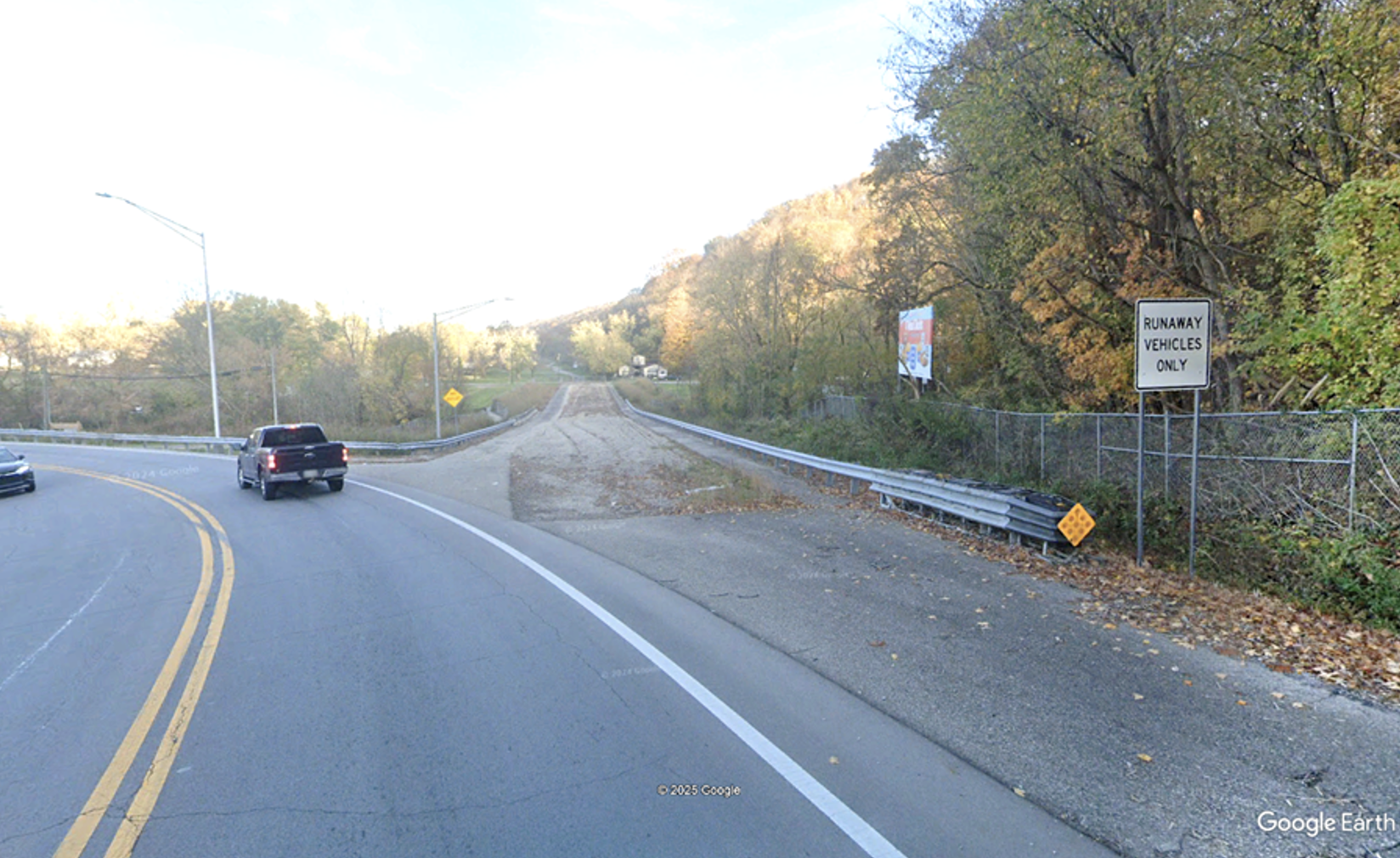
Figure 1 Emergency Escape Ramp on US 421 in Milton, KY.
See Exhibit 18 Runaway Truck Ramp Signings and Markings in KYTC’s Traffic Operations Guidance Manual for signing and pavement marking details.
KYTC Highway Design Manual. HD-705 Truck Climbing Lanes and Emergency Escape Ramps. https://transportation.ky.gov/Organizational-Resources/Policy%20Manuals%20Library/Highway%20Design.pdf
KYTC Traffic Operations Guidance Manual. Exhibit 5 Typical Truck Lane Signing and Markings. https://transportation.ky.gov/Organizational-Resources/Policy%20Manuals%20Library/Traffic%20Operations.pdf
American Association of State Highway and Transportation Officials. (2018). A Policy on the Geometric Design of Highways and Streets, 7th Edition. American Association of State Highway and Transportation Officials, Washington, D.C. https://store.transportation.org/item/collectiondetail/180
Federal Highway Administration. Crash Modification Factors (CMF) Clearinghouse. U.S. Department of Transportation. https://cmfclearinghouse.fhwa.dot.gov
National Academies of Sciences, Engineering, and Medicine. (2024). Truck emergency escape ramp design and operation (NCHRP Synthesis 621). The National Academies Press. https://doi.org/10.17226/27749